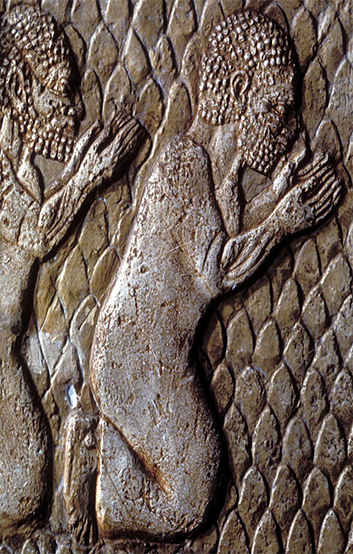
On the Assyrian Lachish Relief, the scene is carved with chilling clarity: the leaders of Judah kneel before King Sennacherib, their hands raised in submission. Above the Assyrian monarch, the inscription is written in cuneiform script, identifying the moment for all time—there is no ambiguity about who kneels before the king. The captives are not anonymous; they are the people of Judah, defeated and recorded in stone by their conqueror.


Black History Case Files is more than a project—it’s a mission. We are dedicated to uncovering, documenting, and revealing the undeniable truths of history that have too often been ignored, rewritten, or deliberately buried. If history has been silenced, we give it a voice. If the record has been distorted, we set it straight. And if the truth is hidden beneath layers of time, bias, or neglect, we will dig it up and bring it back into the light. Every page, every case, and every discovery is part of a larger journey: to restore dignity, reclaim identity, and reconnect generations with the heritage that belongs to them. History is not lost—it is waiting to be found. And we are here to find it.
Highlights
Research
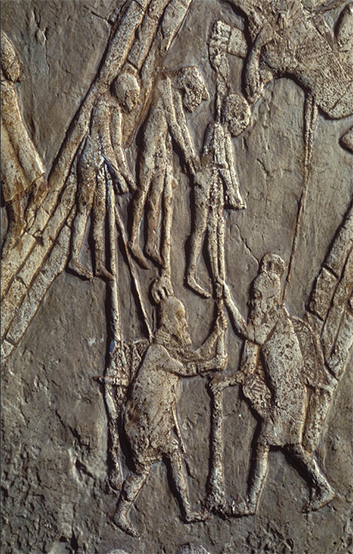
Carved on the palace walls of Nineveh, the Lachish Relief depicts a moment of terror and conquest. The people of Judah are shown with short woolly hair and distinctly African features—not the long, flowing strands or European faces often imagined in later art. In the scene, their bodies are impaled on stakes and set before the walls of their own city, a brutal warning to those still inside.
The Assyrian artists were meticulous. They captured the hair, the faces, the very identity of the captives in stone. And what remains is undeniable: these were not Europeanized figures, but the men and women of Judah with African features, preserved for nearly 3,000 years as both victims of empire and witnesses to their true identity.
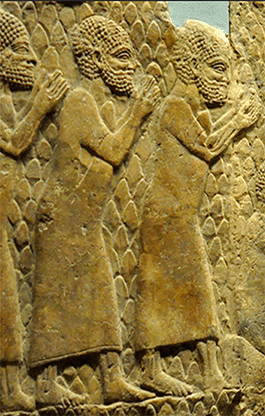
On the Lachish Relief, the people of Judah are shown in a line, their hands raised in surrender as they are marched away under the watch of Assyrian soldiers. The artists made a striking distinction: only the prisoners—those under armed guard—are carved with short woolly hair and unmistakably African features. The Assyrians themselves wear helmets and long ringed beards, but the captives are different, their identity preserved in every curl and contour.
This detail leaves no room for doubt. The captives of Lachish, the tribe of Judah, were remembered in stone not as Europeans, but as a people with African features and tightly coiled hair, forever recorded in the conqueror’s own record of war.
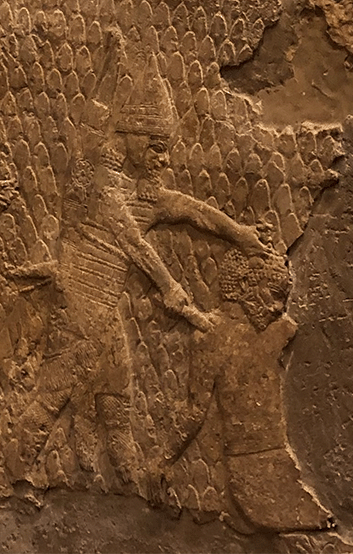
One of the most haunting panels of the Lachish Relief shows an Assyrian soldier in the act of decapitating a warrior of Judah. The scene is brutal, but it is also precise—every detail carefully carved by Assyrian artisans. Look closely at the head of the Judean being slain: his short woolly hair is captured in astonishing detail, with the sculptor chiseling nearly a hundred tiny raised bumps across the scalp to represent the coarse, tightly coiled texture.
This was no stylized flourish. The Assyrians recorded what they saw. The hair is not flowing or straight, but dense, cropped, and woolly, a texture long recognized in African depictions across Egyptian, Nubian, and Nok art. In this chilling moment of conquest, the Assyrians unwittingly left behind something more than a record of war—they carved into stone the true appearance of the people of Judah.
Support By:


Copyright 2024 Archaeology theme. All Rights Reserved.